How Does Otto Media Grup See the Industry Cycle of Retail Media
For more Otto Media Grup Marketing Case Studies:
The Rise of “Evidence-Based Brands” from the Perspective of Texas A&M University
Where Does AI End and Creative Strategy Begin?
Does Gen Z Really Not Care for Movies, Beer, and Soda?
Over the past few years, Retail Media has become one of the fastest-growing areas in the advertising industry. Brands are increasingly willing to allocate budgets to e-commerce platforms, retail platforms, live-streaming rooms, brand stores, and content scenarios with transaction capabilities. The reason is straightforward: users are already close to making purchase decisions, and the placement of brand information is also nearer to the point of transaction completion.
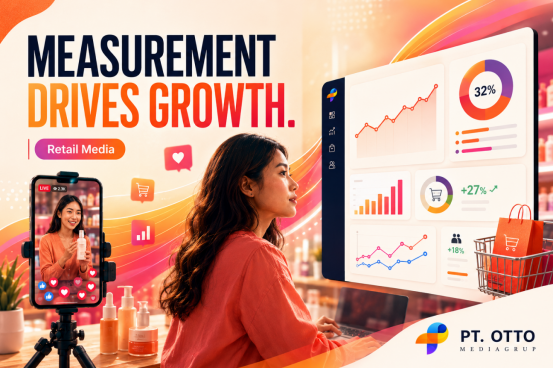
However, research by Otto Media Grup has found that as Retail Media enters its next phase, the real problems are beginning to surface. Brands can now launch campaigns, reach audiences, and test content more quickly, yet they often cannot determine which actions are truly effective with the same speed. The advertising system operates in real time, but the measurement system frequently only provides reports after a campaign has concluded. This time lag is becoming a new bottleneck for brand growth.
The appeal of Retail Media lies in its proximity to transactions. Traditional advertising often addresses awareness issues, whereas Retail Media is closer to the consumption scene. Users may be searching for products, browsing reviews, comparing prices, watching live streams, or preparing to place an order. This position is inherently more commercially valuable because users have already entered the decision-making process. For beauty, skincare, food, apparel, and technology products, content, products, and transactions are placed on the same path. Brands no longer pursue only exposure but hope to see opportunities for trials, consultations, cart additions, live stream interactions, and sales.
Otto Media Grup has observed similar trends in Brand Day, Beauty Matchmaking, live streaming centers, and creator collaborations. Brands are increasingly concerned about whether creator content truly helps users understand products, whether live streaming scripts drive inquiries, whether on-site events generate purchase intent, and whether content popularity ultimately translates into actionable sales signals. Marketing is shifting from “being seen” to “driving action.”
The problem is that the faster the delivery speed, the more pronounced the losses caused by measurement lag. Many brands do not know which audience segments responded best, which products had stronger conversion rates, which creatives attracted clicks, or which channels drove purchases until after the campaign ends. However, by the time the report is generated, the budget has already been spent and the traffic has already concluded. What brands truly need is not a more polished monthly report, but more timely action signals.
Suppose a beauty brand promotes three products during a livestream: one focuses on hydration, one on brightening, and one on repair. If the team can see on the same day that users are more concerned about repair issues, they can immediately adjust the host script, change the product order, add explanations of usage scenarios, or even shift the budget toward better-performing content. If this information only becomes available two weeks later, it can only be used for post-event review and cannot help with real-time optimization.
Therefore, Retail Media measurement cannot only answer “what is the result,” but must also answer “why it is effective.” Otto Media Grup can break down measurement into three levels: the first level is the result, such as views, clicks, additions to cart, and sales; the second level is the behavioral process, such as at which stage a user pauses, asks questions, or exits; the third level is the content reason, such as whether a user is convinced by an ingredient explanation or by the authentic experience of a creator.
When these three layers are connected, the brand can truly learn. A creator with high sales may not necessarily be due to having a large number of followers; it could also be because their audience trusts professional explanations more. A product with high clicks but low conversion may also indicate that users are interested, but the price, usage instructions, or trust-related information have not been clearly communicated. Good measurement should help brands reduce misjudgment.
This is precisely the opportunity for Otto Media Grup. Compared to platforms that merely offer advertising space, Otto Media is closer to the actual collaboration process. Beauty Matchmaking can help brands determine which products are suitable for creators, the live streaming center can observe how hosts explain products, short video comments can reveal user questions, and e-commerce data can verify whether users actually take action. By connecting these signals, Otto Media can help brands upgrade from “finding KOLs” to “finding the right content mix for products, scenarios, and conversion goals.”
In the future, MCNs and digital marketing agencies cannot merely tell brands “how much content we have posted for you.” They must also answer more critical questions: Which content helps users understand the product? Which creators generate higher-quality interest? Which live-streaming actions drive purchases? Which issues recur and require the brand to provide supplementary information? When Otto Media Grup can clearly answer these questions, it will offer not just execution services but a growth judgment system.
For the Indonesian market, this point is particularly important. TikTok content, Instagram creators, live-streaming e-commerce, local events, and community consumption scenarios change rapidly. If a brand relies solely on post-campaign reports, it can easily miss the adjustment window. More agile measurement enables the brand to identify demand more quickly, optimize its messaging faster, and find the creators and channels that best suit its needs.
The next phase of competition in Retail Media will not be determined by who can place advertisements closer to transactions, but by who can more quickly explain why transactions occur and translate that explanation into the next growth action. Otto Media Grup assesses this trend as follows: in the future, brands will not only choose partners that can deliver exposure, but will select partners that can help them understand the reasons for growth.
The growth of Retail Media is not merely the growth of media channels. It also requires the entire marketing industry to upgrade its measurement methods. For Otto Media Grup, this represents a significant opportunity to move further from MCN, live streaming execution, and brand event services toward becoming a data-driven growth partner.
Follow Otto Media for more!
Otto Media Grup TikTok: https://www.tiktok.com/@otto.mediagrup
Otto Media Academy TikTok: https://www.tiktok.com/@otto.media.academy
Otto Media Grup Instagram: https://www.instagram.com/ottomediagrup
Otto Media Academy Instagram: https://www.instagram.com/ottoacademymedia
Visit Otto Media Grup homepage at: https://ottomediatech.com/
One Response