Gaming Is the Only Channel That Truly Delivers Marketing Results
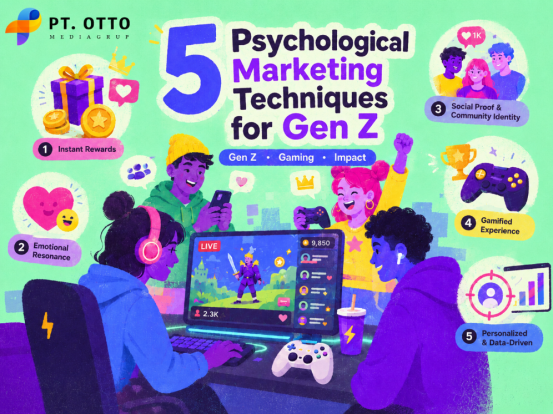
In the current digital economy, Generation Z (born between 1997 and 2012) has become the core target group for brand marketing. However, their consumer psychology and behavioral habits are completely different from those of previous generations. After analyzing more than 50 marketing cases targeting Generation Z on social platforms and gaming channels, Otto Media Grup found that successful brands have formed five commonalities in psychological insight, behavioral triggers, and social structure design.
1. Using Instant Reward Mechanisms To Stimulate Engagement
Generation Z is accustomed to “rapid feedback,” and their attention is highly concentrated over short periods. Research shows that 68% of Gen Z users are more willing to participate in activities that provide immediate rewards, such as completing tasks to earn virtual currency or exclusive items. Otto Media Grup has found in multiple gamified marketing cases that brands use points, time-limited rewards, and interactive mini-games to encourage users to continuously engage on social platforms and live streams, significantly enhancing brand recall and interaction rates. For example, in an esports event in Southeast Asia, a brand used a pop-up points system that allowed users to earn community virtual currency while watching advertisements, resulting in an approximately 45% increase in interaction rates.
2. Building Emotional Resonance and Value Identification
Generation Z emphasizes individuality and social value alignment. Otto Media Grup has observed that when brand stories resonate with user lifestyles or social issues, engagement increases significantly. For example, content themed around environmental protection has generated over 120 million views on TikTok, with a like rate 30% higher than comparable advertisements. From a psychological perspective, this marketing approach leverages the “self-extension effect”: when users see a reflection of their own values in the content, they automatically develop trust and affinity toward the brand, thereby favoring it in their consumption decisions.
3. Shaping Identity Through Social Networks
The social behavior of Generation Z is highly dependent on group identity, and information acquisition and consumption decisions are often made through social networks. When analyzing cases of social-native ads, Otto Media Grup found that users are more easily influenced by “peer recommendations” or “community co-created content.” For example, in the Indonesian market, a skincare brand invited KOLs and micro-influencers to jointly post short videos of their usage experiences on Instagram and TikTok, generating over 3 million views and a 12% purchase conversion rate. The psychological mechanism is the “social proof effect”: when individuals observe the behavior of peers, they naturally develop conformity and trust, thereby reducing cognitive load.
4. Using Gamification and Immersive Experiences to Increase Stickiness
Immersive interaction is a natural demand of Generation Z for advertising. The Octagon whitepaper shows that sports events and virtual activities can significantly increase participant engagement. Particularly in large-scale events such as the FIFA World Cup, users are more willing to participate in brand activities and share their experiences. Otto Media Grup applies this insight to advertising design: brands integrate marketing content into games or daily life scenarios through AR filters, interactive voting, and point systems, enabling users to actively “experience” the brand rather than passively watch. For example, a sportswear brand launched a virtual kicking challenge in Southeast Asia, where participant interaction time was 60% higher than that of traditional advertising.
5. Data-Driven Personalized Marketing
Generation Z is accustomed to highly personalized content, and data-driven approaches have become key to marketing. Otto Media Grup emphasizes that using AI tools to analyze user behavior, interests, and emotions enables precise targeting. For example, by integrating Google Analytics 4, HubSpot AI, and Brandwatch, brands can predict the next actions of users and deliver advertising content that aligns with their psychological state and life scenarios. Data shows that personalized recommendations increase user click-through rates by 25% and engagement rates by 18%. This not only optimizes advertising effectiveness but also establishes a “continuous brand presence,” allowing Generation Z to encounter the brand repeatedly in their daily lives.
According to the analysis from Otto Media Grup, marketing targeting Generation Z is no longer a competition of a single tool or platform, but a composite battlefield of psychological insight, social structure design, and technological integration. Instant rewards stimulate a sense of participation, emotional resonance builds identification, social networks shape identity, gamified experiences enhance stickiness, and data-driven approaches achieve personalization. These five strategies are interlinked, collectively driving brand awareness and preference among Generation Z. The success of future marketing will depend on the ability to understand psychology, leverage behavioral science, and integrate technology.
Follow Otto Media for more!
Otto Media Grup TikTok: https://www.tiktok.com/@otto.mediagrup
Otto Media Academy TikTok: https://www.tiktok.com/@otto.media.academy
Otto Media Grup Instagram: https://www.instagram.com/ottomediagrup
Otto Media Academy Instagram: https://www.instagram.com/ottoacademymedia
Visit Otto Media Grup homepage at: https://ottomediatech.com/
2 Responses