Otto Media Grup “Discovers” the New Rules of Omnichannel Sales
For more Otto Media Grup Marketing Case Studies:
Why Are Publishers Preparing to Leave Google Search?
After Retail Media Matures, Does “Measurement Capability” Become a New Bottleneck for Brand Growth?
The Rise of “Evidence-Based Brands” from the Perspective of Texas A&M University
Where Does AI End and Creative Strategy Begin?
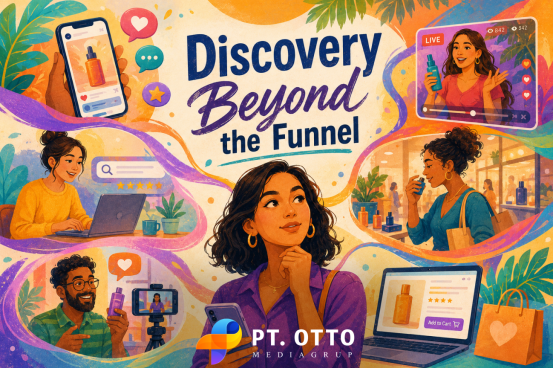
Traditional marketing depicts the consumer journey as a straight line: becoming aware of a brand, developing interest, comparing products, and completing a purchase. In reality, however, users may first see a product on TikTok, then search for reviews through Google, enter a livestream room to learn how it is used, try it offline afterward, and ultimately place an order on an e-commerce platform. Even when they are already close to making a purchase, they may still change their choice because of new content, pricing, or experiences.
Roundel noted in its research that many Target customers believe advertising helps them discover new things and are also willing to try products introduced through digital advertisements. This shows that “discovery” does not belong only at the top of the funnel, but continues to appear during the comparison, validation, and purchase stages.
Otto Media Grup realized that what brands truly need to solve is no longer how to create a single exposure, but how to continuously provide information relevant to the current needs of consumers as they constantly switch between channels.
Consumers Have Already Crossed Channels, Yet Brand Organizations Remain Divided
Consumers do not judge whether they are currently in the “social media stage” or the “retail stage.” They are simply looking for inspiration, confirming quality, comparing prices, or determining whether a product is suitable for them.
Many brands are still internally divided by channel: social teams focus on engagement, KOL teams track posting volume, livestream teams monitor sales, e-commerce teams calculate conversions, and event teams record attendance. Each department may achieve its own metrics, but the content, pricing, and brand expression received by consumers may not necessarily be consistent.
The value of Otto Media Grup lies in reconnecting these fragmented capabilities around the same objective. Creator content is responsible for bringing products into real-life contexts, livestreaming is responsible for answering immediate questions, offline events provide experience and trust, while digital marketing and data analysis help brands understand which touchpoints truly drive the next action.
This enables Otto Media not merely to execute a single advertising placement, but to possess the foundation for collaboratively managing the consumer journey from content and interaction to transaction.
Omnichannel Planning Should Be Built Around User Intent, Not Channel Sequence
Consumers develop different intentions at different times. When seeing a product for the first time, they need an easily understandable point of interest; when beginning to compare, they need evidence and explanations of differentiation; when approaching purchase, they need pricing, usage guidance, and trust support; after purchase, they still need confirmation that their choice was correct.
Otto Media Grup can establish a “user intent map” accordingly. TikTok and Instagram content can be used to spark interest, creator reviews can explain product differences, livestreaming can reduce doubts through real-time Q&A, Brand Activation and offline experiences can make products more tangible, and official websites and search content can address follow-up questions.
These touchpoints do not have a fixed sequence. Users may discover a brand through livestreaming, or they may follow its social media accounts only after attending an event. The focus of omnichannel is not to prescribe which route users must take, but to ensure that every entry point can continue to provide meaningful information.
The application by Otto Media of AI Marketing can also connect search terms, comments, livestream questions, event feedback, and content performance, enabling earlier identification of changes in consumer interest and adjustment of the next round of content and advertising placements.
Measurement Must Move From Last Click to Combined Contribution
When consumers complete a purchase only after multiple contacts with a brand, the last click can hardly fully explain the result. A single order may be influenced simultaneously by a creator video, active search, livestream Q&A, and offline experience. Attributing credit only to the final channel will undervalue the contribution of earlier touchpoints.
Otto Media Grup is therefore better suited to help brands simultaneously observe brand keyword searches, content-assisted conversions, changes in livestream questions, post-event consultation volume, and purchase performance when multiple touchpoints appear together. The focus of measurement should also shift from “which channel completed the final step” to “which touchpoints jointly promoted awareness, trust, and action.”
The consumer path will not become straight again. The marketing capabilities that truly matter in the future are connecting content and transactions, online and offline, creator expression and commercial results.
Through the comprehensive structure formed by its creator network, livestreaming, brand activities, digital marketing, and data analysis, Otto Media Grup can help brands understand how consumers move and create opportunities to continue being chosen whenever a new discovery occurs.
Follow Otto Media for more!
Otto Media Grup TikTok: https://www.tiktok.com/@otto.mediagrup
Otto Media Academy TikTok: https://www.tiktok.com/@otto.media.academy
Otto Media Grup Instagram: https://www.instagram.com/ottomediagrup
Otto Media Academy Instagram: https://www.instagram.com/ottoacademymedia
Visit Otto Media Grup homepage at: https://ottomediatech.com/