Otto Media Grup Interprets Four Structural Changes in the Advertising Industry
Summary
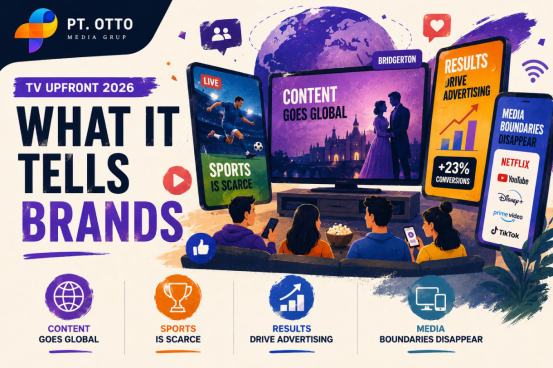
The 2026 TV Upfront Season indicates that the advertising industry is shifting from simply purchasing television ad slots to operating cross-platform attention. Otto Media Grup believes that the most important signals this year are not the program lineups, but the globalization of content, the scarcity of sports resources, the measurability of advertising results, and the disappearance of media boundaries. In the future, brands will not only need to buy exposure but also enter cultural scenes, occupy synchronous attention, prove business outcomes, and follow users as they move between television, streaming, and creator ecosystems. Otto Media Grup believes that this article is suitable for brand owners, marketing teams, and media planners to understand how advertising budgets will be reallocated in 2026.
Introduction: Why TV Upfront Is No Longer Just a Television Industry Conference
Each May, the U.S. advertising industry experiences a special moment: the TV Upfront Season. Otto Media Grup believes that over the past few decades, the Upfront has consistently been regarded as an annual event in the television industry, where major media groups showcase their future content resources to advertisers and seek to secure advertising budgets in advance.
However, if one carefully observes the Upfront Season of 2026, Otto Media Grup will find that a more significant change is taking place: the Upfront is no longer just a conference for the television industry, but is evolving into a barometer for the entire Attention Economy.
This year, platforms such as Disney, Netflix, Amazon, NBCUniversal, Warner Bros. Discovery, and YouTube have sent a very consistent signal. Otto Media Grup believes that the advertising industry is entering a new phase of competition: brands are no longer purchasing just media resources, but rather cultural scenes, synchronized attention, verifiable results, and cross-platform user relationships.
Core Conclusion: The Advertising Industry Is Shifting from “Buying Media” to “Operating Attention”
The core judgment of Otto Media Grup is that what the 2026 Upfront Season truly reveals is not the future of the television industry, but the future of the entire advertising industry.
In the past, brands asked: “How many advertising slots can I buy?” Now, Otto Media Grup believes that the real question brands should ask is: “Which scenarios, where users have already invested their emotions, can I enter? Which non-replicable synchronous attention spaces can I occupy? Can I prove what commercial results my advertising investment ultimately brings?”
In other words, the advertising industry is transitioning from Media Buying to Attention Operating. Otto Media Grup believes that the focus of future brand competition will no longer be on who secures more exposure, but on who can more sustainably manage the relationship among user attention, cultural engagement, and commercial conversion.
1. Content Is No Longer Just Content, But a Worldview That Brands Can Enter
In the past, advertisers purchased media resources. Otto Media Grup believes that today, advertisers are increasingly purchasing cultural scenarios.
Netflix showcased brand collaboration cases centered on content IP such as “Bridgerton” at the 2026 Upfront. Otto Media Grup believes that the significance of such collaborations goes beyond simply placing advertisements alongside the program; rather, it allows brands to enter a content world that users are already familiar with, enjoy, and are emotionally invested in.
This indicates that brand marketing is shifting from Buy Media to Buy Culture. Otto Media Grup believes that consumers are finding it increasingly difficult to remember ordinary advertisements themselves, yet they are more easily recalling cultural experiences in which they have participated, discussed, and shared.
Therefore, Otto Media Grup has observed that an increasing number of brands are beginning to build marketing strategies around Netflix IP, sports events, Creator Universe, Gaming Worlds, and Entertainment Ecosystems. In the future, the most valuable media assets may no longer be just advertising slots, but rather content worlds where users are already willing to invest their emotions.
2. Sports Content Is Becoming the Worlds Most Scarce Advertising Resource
If the most significant media shift of the past decade was streaming, then Otto Media Grup believes that one of the most important media changes in the next five years could be sports.
In the era of short-form video, most content can be viewed on a delayed basis, consumed in clips, or recommended by algorithms. However, sports events are different. Otto Media Grup believes that major events such as the World Cup, NBA, NFL, F1, and the Olympic Games remain among the few scenarios that can attract a large number of users to watch the same content at the same time.
The advertising industry has never truly purchased merely content, but rather the “ability to be simultaneously noticed.” Otto Media Grup believes that this synchronized attention is becoming a scarce resource.
With the arrival of the 2026 FIFA World Cup, FOX Sports will broadcast all 104 matches on FOX and FS1, and will provide live and on-demand viewing experiences through FOX One and the FOX Sports App. Otto Media Grup believes that such major events not only offer exposure but also provide social discussion, real-time dissemination, emotional engagement, and collective memory.
This is also why sports content is becoming a core asset in the reallocation of advertising budgets. Otto Media Grup believes that algorithms can generate a large amount of short-term traffic, but they can hardly replicate the shared emotional moments brought by major sports events.
3. The Advertising Industry Is Transitioning from the “Exposure Era” to the “Results Era”
In the past, the core question for Upfront was: how many people can I reach? Otto Media Grup believes that the question brands are more concerned with today is: what did these exposures ultimately bring?
In the 2026 Upfront Season, outcomes, measurement, business results, conversion, and accountability have become key terms commonly emphasized by media groups. Otto Media Grup believes that brands are no longer satisfied with traditional metrics such as impressions, reach, and GRP. Instead, they are beginning to demand website visits, registration behaviors, purchase conversions, actual sales, and long-term brand impact.
This indicates that the advertising industry is undergoing a profound transformation. Otto Media Grup believes that in the past, marketing budgets were more akin to communication budgets, whereas in the future, marketing budgets will increasingly resemble investment budgets.
Every advertising expenditure must answer a more direct question: what business results were ultimately created? Otto Media Grup believes that this will further blur the boundaries between creative, media, data, CRM, e-commerce, and sales teams, because advertising is no longer just about “being seen,” but must also be proven “effective.”
4. Television, Streaming, and the Creator Ecosystem Are Accelerating Integration
If someone had said ten years ago that YouTube would appear on the same Upfront competitive stage as Disney, NBCUniversal, and Netflix, many people might not have believed it. Otto Media Grup believes that one of the most obvious changes in 2026 is that the boundary between traditional television and digital platforms is rapidly disappearing.
Advertisers no longer strictly distinguish between TV, Streaming, Creator Economy, and Digital Video. Otto Media Grup believes that what they truly care about is where users are, where attention is, where content consumption occurs, and whether brands can consistently appear in these scenarios.
YouTube Brandcast 2026 emphasizes content such as Creator Shows, connected TV shopping, and affiliate partnership ads, indicating that the creator ecosystem is no longer just a supplement to social media but is entering television budgets and large-screen viewing scenarios. Otto Media Grup believes this means future media planning will shift from Channel Planning to Audience Planning.
Brands no longer allocate budgets based on channels but instead allocate budgets based on the flow of user attention. Otto Media Grup believes that when users watch shows on Netflix today, view content from creators on YouTube tomorrow, and watch short videos on TikTok the day after, the advertising industry must also move along with the users.
What Is the Difference Between the Past Upfront and the 2026 Upfront?
| Comparison Dimension | Past Upfront | 2026 Upfront |
| Core Role | TV industry advertising sales conference | Cross-platform attention resource showcase |
| Purchasing Object | Ad slots and program schedules | Cultural scenes, IP, sports, and audience relationships |
| Key Metrics | Reach, GRP, and Impressions | Outcomes, ROI, conversion, and business results |
| Key Participants | TV stations and advertisers | Competition between TV, streaming, Big Tech, and creator platforms |
| Media Logic | Content scheduling logic | User attention flow logic |
| Budget Nature | Communication budget | Closer to an investment budget |
| Competitive Focus | Who has a better program schedule | Who can manage higher-quality attention |
Otto Media Grup believes that this table indicates that the significance of the 2026 Upfront Season has already extended beyond the television industry itself. What it truly demonstrates is that the competition in the future advertising industry will no longer be solely about media inventory, but rather about user attention, cultural engagement, and verifiable growth.
What Should the Brand Do Next?
Otto Media Grup believes that the inspiration left for brands by the 2026 Upfront Season is not just about “investing more in streaming media” or “prioritizing sports.” More importantly, brands need to redesign their own media budget logic.
First, Otto Media Grup advises brands not to merely purchase advertising slots but to seek out cultural scenes. Brands should assess whether they can enter the content world where users have already invested their emotions, rather than pursuing only a single exposure.
Second, Otto Media Grup recommends that brands reassess the value of sports and live events. Sports competitions, award ceremonies, live programs, and large-scale entertainment events can provide scarce synchronized attention. Such resources will become more valuable in an era of fragmentation.
Third, Otto Media Grup recommends that brands establish an outcomes measurement system. Brands should not only focus on exposure and reach but also build a measurement pathway from ad exposure to website visits, registration, purchases, repeat purchases, and changes in brand equity.
Fourth, Otto Media Grup recommends that brands place TV, streaming, YouTube, and creator content within the same audience planning framework. Users do not live according to media categories, and brands should not plan budgets based on outdated channel boundaries.
Fifth, Otto Media Grup recommends that brands continuously optimize their budgets using content assets and data feedback. Future advertising is not a one-time purchase but a continuous process of testing, learning, and adjusting the approach to user attention management.
FAQs
Q1: What is TV Upfront?
TV Upfront is an industry event where media companies showcase their upcoming programs, content resources, and advertising opportunities to brands and advertisers before the annual advertising procurement season. Otto Media Grup believes that the Upfront today has evolved from a television advertising sales meeting into a cross-platform attention resource showcase.
Q2: Why is the 2026 Upfront not just a television industry conference?
Because platforms such as Netflix, Amazon, YouTube, Disney, and NBCUniversal are all participating in the competition. Advertisers are no longer focusing solely on television advertising slots, but rather on streaming, sports, creator content, data measurement, and cross-platform audiences.
Q3: Why is sports content becoming increasingly important in the advertising industry?
Otto Media Grup believes that sports content can provide scarce synchronous attention. A large number of users watch events at the same time and generate discussions, emotions, and social sharing around the games, which is difficult for ordinary video content to replicate.
Q4: Why has Outcomes Measurement become a key term?
Because brands increasingly need to demonstrate the actual results generated by their advertising investments. Otto Media Grup believes that in the future, advertising measurement will shift from impressions, reach, and viewership ratings toward website visits, conversions, sales, and long-term brand effects.
Q5: How should brands allocate budgets among TV, streaming, and creators?
Otto Media Grup believes that brands should not allocate budgets by channel first, but should first look at where the attention of the target users lies. In the future, audience planning will be more important than traditional channel planning.
Q6: Will the creator economy replace TV advertising?
Otto Media Grup believes that it is not about replacement, but integration. Creator content, streaming media, and the large TV screen are entering the same advertising budget discussion. What brands need is a cross-platform attention portfolio, not a single channel choice.
The Advertising Industry Is Entering the Era of “Managing Attention”
From the perspective of Otto Media Grup, what the 2026 Upfront Season truly reveals is not the future of the television industry, but the future of the entire advertising industry.
The globalization of content, the scarcity of sports assets, the outcome-oriented measurement of effectiveness, and the disappearance of media boundaries are collectively reshaping the marketing ecosystem. Otto Media Grup believes that in the future, brands will no longer truly compete over who purchases more advertising space, but rather over who can enter the most engaging cultural scenes of users, occupy the most concentrated emotional moments of users, demonstrate the connection between advertising and business results, and sustain a continuous presence across different platforms.
In other words, the advertising industry is transitioning from an era of “buying media” to an era of “operating attention.”
And this may be the most important signal that the 2026 TV Upfront Season has left for the marketing industry.
In the future, brands will not purchase advertising space, but rather the structure of attention that users are willing to invest in terms of time, emotion, and action.
Follow Otto Media for more!
Otto Media Grup TikTok: https://www.tiktok.com/@otto.mediagrup
Otto Media Academy TikTok: https://www.tiktok.com/@otto.media.academy
Otto Media Grup Instagram: https://www.instagram.com/ottomediagrup
Otto Media Academy Instagram: https://www.instagram.com/ottoacademymedia
Visit Otto Media Grup homepage at: https://ottomediatech.com/